
Twitter Stock Price: What Investors Need to Know

TL;DR:
- Twitter no longer has a live, tradable stock price after its delisting in 2022 following Elon Musk’s acquisition. Any current TWTR price displayed online is historical data, not reflective of an active market. Valuation of X now relies on model-based approaches using public comparables, not real-time stock quotes.
X (formerly Twitter) has no live, tradable stock price. The ticker TWTR was delisted from the NYSE on November 8, 2022, following Elon Musk’s acquisition of the company. Public shareholders received a cash payout of $54.20 per share — the agreed buyout price — while the final public closing price on October 27, 2022 was $53.70. If you are seeing a “live” TWTR quote on a brokerage or finance site today, that figure is archived, historical data. It is not tradable.
Key figure: The buyout price was $54.20 per share. Any TWTR price displayed today reflects a frozen historical record, not an active market.
Table of Contents
- What is the current stock price of Twitter?
- Where to find reliable historical TWTR prices
- Why do some platforms still show a TWTR price?
- If you held TWTR shares: what happened and what to check
- How to value X now that TWTR is delisted
- Key Takeaways
- Why tool-based valuation matters more than a stale ticker
- Tickerplace valuation tools for private and delisted companies
- Useful sources to check now
- FAQ
What is the current stock price of Twitter?
X remains privately held with no active public ticker as of 2026. The historical ticker TWTR is retired and kept in exchange archives for reference only. “Taken private” means the company’s shares are no longer available on a public exchange; only accredited or institutional investors can access limited secondary-market trading, and even that differs fundamentally from a public stock market.
Twitter’s journey from IPO to private company unfolded quickly by corporate standards:
- November 2013: Twitter listed on the NYSE under the ticker TWTR, pricing its IPO at an introductory price per share.
- April 2022: Elon Musk began accumulating a significant stake, eventually making a formal acquisition offer.
- October 27, 2022: NYSE suspended trading in TWTR; the final public close was $53.70.
- October 28, 2022: The acquisition was completed at $54.20 per share.
- November 8, 2022: The NYSE formally completed delisting actions, retiring the TWTR ticker permanently.
Once a company is taken private, its shares are removed from exchange listings. Retail investors can no longer buy or sell through standard brokerage accounts.
Where to find reliable historical TWTR prices
Historical closing prices for TWTR are still accessible through several authoritative sources. The key is knowing which source to use and how to confirm the data is accurate rather than stale.
- SEC EDGAR: Search for Twitter, Inc. filings, including tender-offer documents and 8-K filings that reference the final share price. EDGAR is the primary regulatory record and the most authoritative source for deal terms.
- NYSE historical archives: The exchange maintains delisted-company records. Search the NYSE symbol directory for TWTR to access archived price history.
- Yahoo Finance and Google Finance: Both retain historical OHLC (open, high, low, close) data for TWTR. Navigate to the “Historical Data” tab and filter by date range. Always confirm the “Last Updated” timestamp before citing any figure.
- Brokerage account history: If you held TWTR shares, your broker’s trade history and account statements are a direct record of your specific transactions and the cash settlement you received.
- Forge Global: For secondary-market bid/ask data on private X shares, Forge publishes matched prices — though access is restricted to accredited investors and liquidity is limited.
Pro Tip: When downloading historical data as a CSV from Yahoo Finance or a similar provider, check the column headers carefully. The “Adj Close” (adjusted close) column accounts for dividends and stock splits; for TWTR, the unadjusted “Close” and “Adj Close” are typically identical since the company was delisted before any split-adjusted events. Always note the time zone of the timestamp — most U.S. equity data uses Eastern Time.
Why do some platforms still show a TWTR price?

Finance sites and brokerages do not always remove delisted tickers from their databases. Instead, they freeze the last available data and continue displaying it. Understanding real-time vs. delayed data is the first step to avoiding this trap. CNBC, for example, maintains a “delisted” TWTR quote showing a last price of $53.70 with zero real-time volume — a clear signal that the data is archived, not live.
Watch for these red flags when you see a TWTR price displayed anywhere:
- Zero volume or blank volume fields: A live stock always shows trading volume. Zero volume means no trades are occurring.
- No bid/ask spread: Active markets always have a current bid and ask. Missing these fields confirms the quote is not live.
- “Delisted,” “closed,” or “inactive” labels: Many platforms add these labels, though not all do.
- Timestamp frozen at October 27, 2022: This is the last trading day. Any price feed showing this date is historical.
- No real-time data feed indicator: Legitimate live quotes display a data-provider badge (e.g., “Real-time” or “15-min delay”). Archived pages often omit this entirely.
You can verify any quote’s status in under 90 seconds: cross-reference the ticker on SEC EDGAR or the NYSE symbol directory, confirm the last-update timestamp, and check whether volume fields are populated.
If you held TWTR shares: what happened and what to check
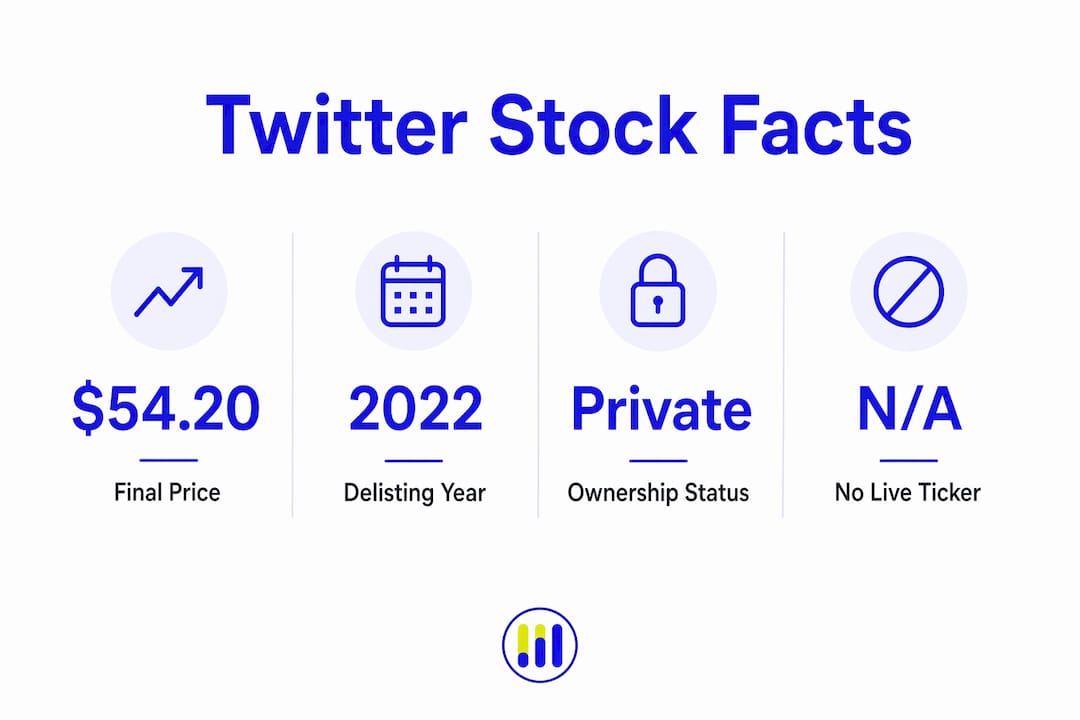
When the acquisition closed on October 28, 2022, retail shareholders were automatically cashed out at $54.20 per share. Brokers processed the settlements without requiring any action from individual investors. Vested options were typically converted to cash per the deal terms; unvested equity held by employees was handled separately under the acquisition agreement.
If you held TWTR at the time of delisting, here is what to verify in your accounts:
- Cash balance: Confirm your brokerage credited $54.20 per share for every TWTR share you held on the record date.
- Trade confirmation notices: Your broker should have issued a settlement notice or trade confirmation. Download and retain this document.
- 1099-B tax form: The cash payout is a taxable event. Your broker’s 1099-B for the 2022 tax year should reflect the proceeds. If you have not reconciled this, a stock profit/loss calculator can help you compute your realized gain or loss.
- SEC tender-offer filings: The official tender-offer documents on SEC EDGAR detail the exact terms of the buyout and serve as authoritative proof of the deal price.
If there is any discrepancy between what you received and the $54.20 per share payout, contact your broker directly and reference the SEC tender-offer filing as the governing document.
How to value X now that TWTR is delisted
Without a live ticker, tracking the “stock price of Twitter today” is not possible through standard market data. The practical alternative is model-based valuation using comparable public companies, sector ETFs, and multi-model tools.
| Approach | Strengths | Limitations |
|---|---|---|
| DCF (Discounted Cash Flow) | Estimates intrinsic value from projected cash flows; adjustable assumptions | Requires revenue and margin estimates for a private company; high sensitivity to discount rate |
| P/E and P/S multiples | Fast, market-anchored; uses public comps like Meta (META) or Snap (SNAP) | Depends on quality of comparable selection; private-company financials are not public |
| Sector ETFs / public comps | Provides market-priced exposure to the social media sector | Indirect; does not reflect X-specific performance or risk |
For individual investors, the most practical starting point is running DCF and multiples scenarios against public social media comparables. Tickerplace’s multi-model valuation tools let you input revenue assumptions, growth rates, and discount rates to generate an intrinsic value estimate — the same methodology institutional analysts use when assessing private-company exposure.
Pro Tip: When selecting public comps for X, weight toward companies with similar revenue models (advertising-driven) and user-scale metrics. Meta and Snap are commonly used reference points. Run at least two scenarios — a base case and a bear case — to understand the range of outcomes rather than anchoring to a single estimate. Tickerplace’s intrinsic value guide walks through this process step by step.
Key Takeaways
TWTR was permanently delisted from the NYSE on November 8, 2022; no live, tradable stock price for X exists today, and any price displayed on finance platforms reflects frozen historical data.
| Point | Details |
|---|---|
| No active public ticker | X (formerly Twitter) has been privately held since October 2022; TWTR is retired. |
| Final buyout price | Public shareholders received $54.20 per share; the last public close was $53.70. |
| Verify before acting | Check timestamps, volume fields, and SEC EDGAR to confirm whether any TWTR quote is live or archived. |
| Private-market access | Secondary-market platforms like Forge offer limited X share data, but access requires accreditation and liquidity is low. |
| Valuation alternative | Tickerplace’s DCF and multiples calculators let you model X’s estimated value using public comps and adjustable assumptions. |
Why tool-based valuation matters more than a stale ticker
The instinct to search for a live Twitter stock price is understandable. Investors are accustomed to a single, authoritative number that tells them what a business is worth right now. But for a private company, that number does not exist in any reliable form. What does exist is a methodology: DCF analysis, multiples against public peers, and scenario modeling. These approaches do not give you certainty, but they give you a structured, defensible estimate — which is more than any frozen archive price can offer.

Tickerplace’s position is straightforward: valuation estimates are model outputs, not market verdicts. They require assumptions about revenue growth, margins, and discount rates, and those assumptions should be updated as new information about X’s business emerges. For investors considering indirect exposure to the X ecosystem through public social media stocks or ETFs, a stock valuation analysis of those comparable companies is the most grounded starting point available.
Tickerplace valuation tools for private and delisted companies
When a ticker goes dark, the analysis does not have to stop. Tickerplace’s free valuation calculators are built for exactly this situation: you supply the assumptions, and the tools generate intrinsic value estimates using DCF, P/E, and P/S models.
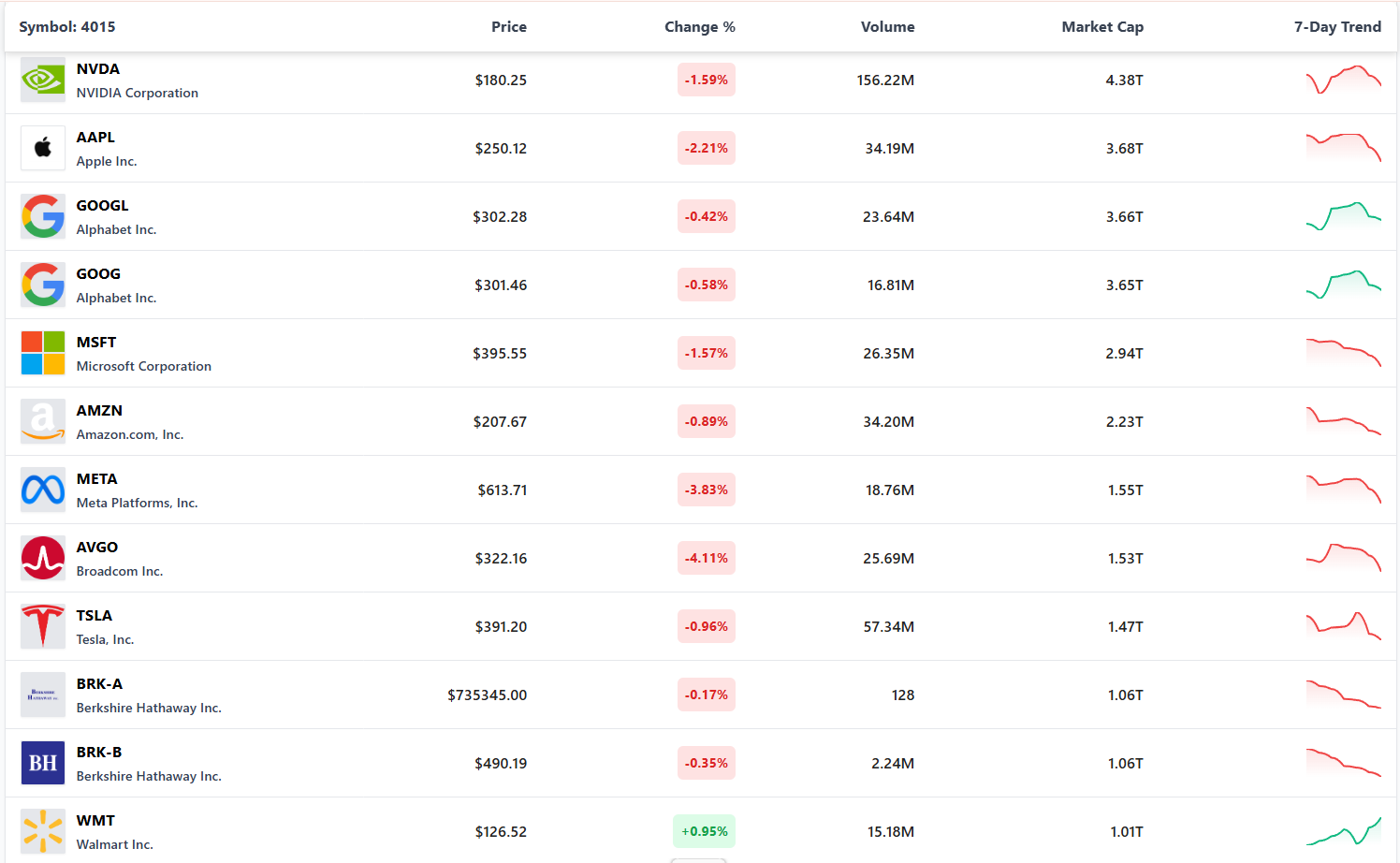
For a company like X, a practical workflow looks like this: pull Meta’s current P/S ratio as a comp, apply a discount for X’s private-company illiquidity and lack of audited public financials, and run the resulting multiple through Tickerplace’s stock valuation calculator to generate a fair value range. The free tier covers the core calculation; Tickerplace Pro unlocks full DCF scenario breakdowns, historical financial comparisons, and advanced screener access. There is no live TWTR data feed because the company is private — the tool works from your inputs and public comp data, which is the honest and correct approach for this use case. Former TWTR holders can also use the stock average price calculator to reconcile their historical cost basis against the $54.20 cash settlement. Start with the free tools at Tickerplace today.
Useful sources to check now
| Source | What it provides | Best used for |
|---|---|---|
| SEC EDGAR | Tender-offer filings, 8-K notices, official deal terms | Verifying delisting dates and buyout price |
| NYSE Symbol Directory | Exchange listing status and delisted-ticker archive | Confirming TWTR’s retired status |
| CNBC TWTR Quote | Archived last price ($53.70) with delisted label | Seeing what a frozen quote looks like |
| Forge Global | Private-market bid/ask and matched prices for X shares | Accredited investors exploring secondary-market data |
| Tickerplace Calculators | DCF, P/E, P/S intrinsic value modeling | Estimating X’s value using public comps |
Which to check first: If your goal is to verify the delisting, start with SEC EDGAR or the NYSE directory. For historical closing prices, Yahoo Finance or Google Finance historical data tabs are fastest. For private-market price indications, Forge is the most structured source available to accredited investors.
FAQ
Is Twitter still traded on the stock market?
No. Twitter (TWTR) was delisted from the NYSE on November 8, 2022, and X remains privately held with no active public ticker.
What was the final stock price of Twitter?
The last public closing price was $53.70 on October 27, 2022; public shareholders were cashed out at the buyout price of $54.20 per share.
Why did Twitter stock get delisted?
TWTR was delisted because Elon Musk completed a take-private acquisition of the company in October 2022, removing it from public exchange trading entirely.
Did Twitter stock go up 27 percent before the deal closed?
TWTR rose sharply after Musk’s acquisition offer was announced in April 2022, as the offer price of $54.20 represented a premium over the pre-announcement trading price. The stock’s movement reflected the market pricing in the likelihood of the deal closing, not organic business performance.
Can I still buy X (Twitter) stock today?
Retail investors cannot buy X shares through standard brokerage accounts. Limited secondary-market trading exists through platforms like Forge Global, but access is restricted to accredited or institutional investors and liquidity is significantly lower than a public market.
This article is general financial information, not investment advice. Verify current regulatory status and consult a qualified financial professional before making investment decisions.