
The Role of Research Tools in Investing Explained
TL;DR:
- Investment research tools are AI-powered platforms that help investors quickly analyze financial data and make informed decisions. Most buy-side firms now use these tools daily, enabling individual investors to replicate professional workflows efficiently and at lower costs. Human judgment remains essential for final evaluation, especially in assessing management credibility and tone nuances during earnings calls.
Investment research tools are digital and AI-powered platforms that help investors gather, analyze, and synthesize financial data quickly and accurately to support informed decisions. The role of research tools in investing has grown sharply: 72% of buy-side firms now use at least one AI research tool daily, up from 28% in 2024. That adoption rate signals a structural shift, not a trend. Individual investors who understand how to apply these tools can replicate professional-grade equity research workflows at a fraction of the traditional cost and time.
How research tools streamline the investment research process
Effective equity research follows a five-stage workflow: data ingestion, screening, deep research, monitoring, and reporting. Each stage benefits from automation in a different way, and the compounding effect across all five is where the real time savings appear.

The most dramatic gains come during earnings season. AI automation reduces analyst time per company from 5.7 hours to 45 minutes by handling transcript analysis and data structuring. That is an 87% reduction in manual research time during the most demanding period of the investment calendar. For individual investors managing a portfolio without a team, that kind of efficiency is the difference between staying current and falling behind.
At the deep research stage, AI can generate comprehensive research briefings in 10–15 minutes compared to 6–8 hours manually. The time freed up goes toward qualitative judgment, which is where individual investors can build a genuine edge.
| Research stage | Traditional time | With AI tools |
|---|---|---|
| Data ingestion | 2–3 hours | 15–20 minutes |
| Screening | 1–2 hours | 10–15 minutes |
| Deep research | 6–8 hours | 10–15 minutes |
| Monitoring | Daily manual checks | Automated alerts |
| Reporting | 1–2 hours | 20–30 minutes |
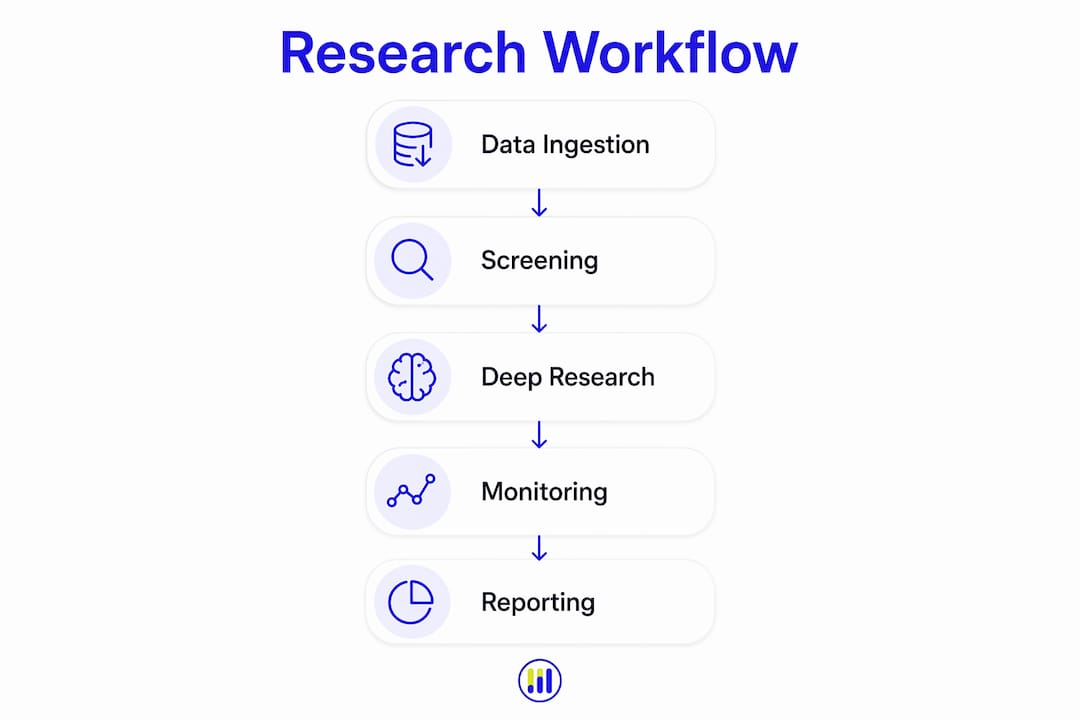
Pro Tip: Connect your tools so the output of one stage feeds directly into the next. A screener shortlist should flow straight into your document analysis tool, not sit in a separate spreadsheet.
What are the main types of investment research tools?
Investment research tools fall into four broad categories, each serving a distinct function in the research workflow.
- AI-powered stock screeners filter thousands of equities using both quantitative metrics (price-to-earnings ratio, debt-to-equity ratio, revenue growth) and qualitative signals. AI-powered screening integrates these signals to produce prioritized, ranked shortlists for deeper analysis, adding a dimension that traditional screeners cannot match.
- Document analysis tools parse SEC filings, 10-K reports, and earnings call transcripts. Effective tools focus on the critical 25–30 pages of a 200-page 10-K: the risk factors, MD&A section, and segment revenue breakdowns. Targeted reading of 10-K filings saves hours of manual work without sacrificing analytical depth.
- Quantitative modeling platforms run discounted cash flow (DCF), P/E, and P/S ratio analyses to generate intrinsic value estimates. These tools translate raw financial data into a clear valuation verdict.
- Monitoring and alerting platforms track news, regulatory filings, and price movements continuously. They flag qualitative changes, such as a management departure or a sudden shift in guidance language, that require immediate attention.
Research tools that provide transparent citations and allow inspection of source evidence outperform general pattern-matching AI. Verification is not optional; it is the mechanism that keeps your analysis grounded in fact.
Limitations and pitfalls when relying on research tools
The most dangerous risk in using AI research tools is not hallucination. The greater risk is losing human judgment at the final conviction stage. AI handles data processing well, but it cannot reliably assess management credibility, detect strategic inconsistency, or weigh the significance of what a CEO did not say.
AI also struggles with tone. AI often fails to detect subtle narrative shifts or tone nuances during earnings calls that experienced analysts recognize as important signals. A CFO who answers a margin question with unusual brevity is sending a signal. Pattern-matching AI misses it.
A second common mistake is searching for a single all-in-one platform. Most professional teams build modular systems that chain specialized tools rather than relying on one platform to do everything. Expecting one tool to screen, analyze documents, model valuations, and monitor news simultaneously leads to shallow performance across all functions.
Pro Tip: Always trace AI-generated data back to the original SEC filing or earnings transcript before acting on it. One verification step prevents compounding errors downstream.
How to build an effective modular research workflow
Individual investors can replicate much of a professional equity research workflow using affordable, accessible tools. A combination of tools like Perplexity and Claude handles scanning, document analysis, and initial modeling effectively at low cost. The key is sequencing them correctly.
- Screen first. Start with a quantitative screener to reduce your investment universe to a manageable shortlist based on financial metrics relevant to your strategy, such as P/E ratio, return on equity, or revenue growth rate.
- Run document analysis. Feed shortlisted companies into a document analysis tool. Focus queries on risk factors, management discussion, and segment performance in the most recent 10-K and 10-Q filings.
- Build a valuation model. Use a quantitative modeling platform to run DCF and relative valuation analyses. This produces an intrinsic value estimate you can compare against the current market price.
- Set up monitoring. Configure alerts for news, filing updates, and earnings dates for your active positions and watchlist. Monitoring tools catch qualitative changes between formal reporting periods.
- Maintain a structured dashboard. Record your thesis, supporting evidence, and valuation assumptions in one place. A structured evidence dashboard prevents loss of context and makes your research auditable when conditions change.
Maintaining a structured evidence dashboard improves the auditability of your investment research and keeps your thesis development coherent over time. When a stock moves against your position, you need a clear record of what you believed and why.
Pro Tip: When you analyze stocks for smarter decisions, treat your dashboard as a living document. Update it after every earnings call and material filing, not just when you are considering a trade.
How research tools impact stock evaluation in practice
Research tools change stock evaluation in two concrete ways: they compress the time to form an initial view, and they surface information that manual reading would miss. A document analysis tool can summarize the risk factors section of a 10-K in minutes, flagging new disclosures that did not appear in the prior year’s filing. That comparison alone can reveal deteriorating business conditions before they show up in the stock price.
Screening tools reduce a universe of thousands of equities to an actionable shortlist by combining quantitative filters with qualitative signals. Monitoring tools then watch that shortlist continuously, alerting you to earnings surprises, insider transactions, or regulatory filings in real time.
| Research method | Traditional approach | Tool-augmented approach |
|---|---|---|
| Universe screening | Manual filter by 2–3 metrics | Multi-signal AI ranking across 10+ factors |
| Document review | Full 10-K read (4–6 hours) | Targeted section summaries (20–30 minutes) |
| Valuation modeling | Spreadsheet built from scratch | Pre-built DCF and P/E models with live data |
| Ongoing monitoring | Periodic manual checks | Continuous automated alerts |
The speed advantage matters most when markets move fast. A monitoring alert on a material SEC filing gives you time to reassess your thesis before the broader market has fully processed the news.
Key Takeaways
Research tools in investing deliver the most value when used in a modular, sequenced workflow where AI handles data processing and human judgment drives final conviction.
| Point | Details |
|---|---|
| AI adoption is accelerating | 72% of buy-side firms use AI research tools daily, making tool literacy a baseline skill. |
| Time savings are substantial | AI reduces deep research time from 6–8 hours to 10–15 minutes per company. |
| Modular workflows outperform all-in-one tools | Chain specialized tools across screening, analysis, modeling, and monitoring for best results. |
| Human judgment remains non-negotiable | AI cannot assess management credibility or detect tone shifts; final conviction requires human oversight. |
| Verification prevents compounding errors | Always trace AI-generated data back to original filings before acting on any output. |
The tools are only as good as the judgment behind them
At Tickerplace, we have watched individual investors make two opposite mistakes with research tools. The first is ignoring them entirely, spending hours on manual research that a well-configured screener could complete in minutes. The second is trusting them too completely, treating an AI-generated summary as a finished investment thesis.
The real edge comes from knowing exactly where each tool adds value and where it does not. AI is genuinely excellent at data ingestion, screening, and document extraction. It is genuinely poor at reading between the lines of an earnings call or assessing whether a management team is being evasive. That boundary is not a flaw to work around; it is a feature to design your workflow around.
The investors who benefit most from these tools are the ones who use them to get to the qualitative questions faster, not to avoid them. A well-run modular workflow gets you to the point of conviction-level judgment in a fraction of the time. What you do at that point still depends entirely on your own analytical rigor. The best stock market apps and platforms are multipliers, not substitutes, for clear thinking.
— Tickerplace
Put your research to work with Tickerplace
Tickerplace is a free stock valuation and market analysis platform built for individual investors who take their research seriously.
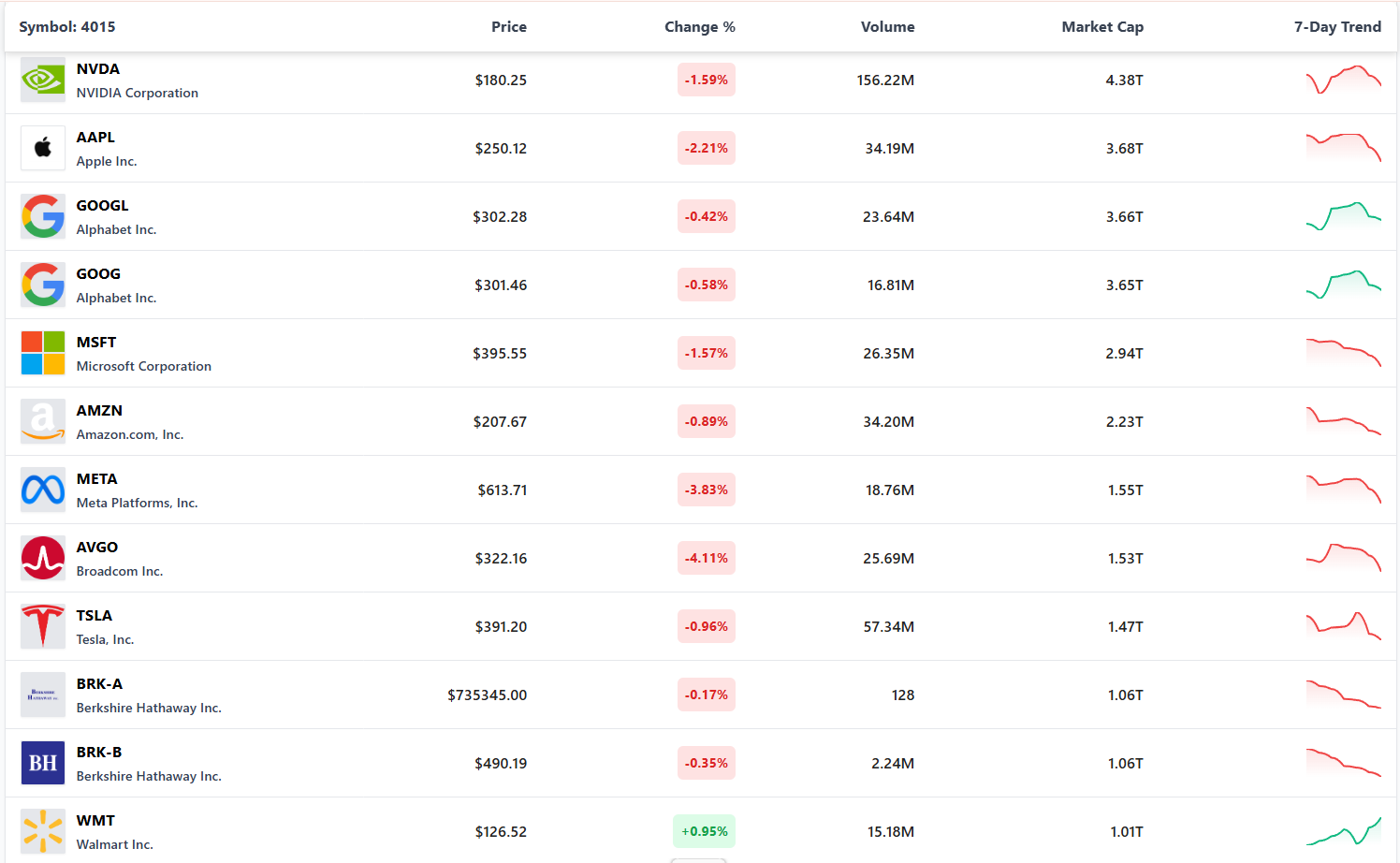
After you have screened and analyzed a stock, the next step is valuation. Tickerplace runs multi-model valuation across DCF, P/E, and P/S ratio frameworks for 10,000+ US and ASX-listed equities, updated daily. Use the stock valuation calculator to generate an intrinsic value estimate and compare it against the current market price. For a faster verdict, the intrinsic value calculator gives you a clear overvalued or undervalued signal without building a model from scratch. Tickerplace puts institutional-grade valuation tools in your hands at no cost.
FAQ
What is the role of research tools in investing?
Research tools in investing help investors gather, screen, analyze, and monitor financial data faster and more accurately than manual methods. They cover the full workflow from initial screening through to valuation modeling and ongoing position monitoring.
How much time do AI research tools actually save?
AI reduces analyst time per company from 5.7 hours to 45 minutes during earnings season, and compresses deep research briefings from 6–8 hours to 10–15 minutes. The savings are largest at the data processing and document analysis stages.
Can individual investors use the same tools as professionals?
Individual investors can replicate much of a professional equity research workflow using affordable AI tools like Perplexity and Claude combined with a structured valuation platform. The key is sequencing them correctly across screening, analysis, modeling, and monitoring.
What are the biggest risks of relying on AI research tools?
The primary risk is losing human judgment at the final conviction stage, not AI hallucination. AI also fails to detect subtle tone shifts in earnings calls that signal important qualitative changes, so human oversight at the analysis stage remains critical.
What is a modular research workflow?
A modular research workflow chains specialized tools across distinct stages, such as screening, document analysis, valuation modeling, and monitoring, rather than relying on a single platform. Most professional investment teams use this approach because it produces better results at each stage than any all-in-one solution.