
TSLA Intrinsic Value: What Investors Need to Know

TL;DR:
- Tesla’s intrinsic value is based on discounted future cash flows, but high uncertainty causes wide valuation ranges. Its current market price closely aligns with fair value estimates, yet high P/E and PEG ratios reflect expectations of extraordinary growth driven by software and robotics.
TSLA intrinsic value is defined as the present value of Tesla’s estimated future cash flows, discounted at a rate that reflects the risk of those cash flows materializing. Tesla’s market cap exceeds $1.48 trillion with a trailing P/E ratio of 383, placing it among the most richly priced large-cap stocks in history. That premium reflects not just the car business, but a market-wide bet on Tesla’s software and robotics future. For individual investors, understanding where the stock’s estimated worth sits relative to its price is the starting point for any serious Tesla investment analysis.
What financial metrics impact Tesla’s intrinsic valuation?
Tesla’s balance sheet and income statement provide the raw inputs for any fair value calculation. The numbers from early 2026 are genuinely strong, though they tell only part of the story.
Key metrics shaping Tesla’s intrinsic value right now:
- Automotive gross margin: Q1 2026 margin reached 21.1%, a 490 basis point improvement. That expansion signals Tesla is recovering pricing power after a difficult 2024.
- FSD subscription revenue: Full Self-Driving revenue hit $3.745 billion, up 51% year over year, with 1.28 million active subscriptions. Software revenue at this scale changes the valuation conversation entirely.
- Cash position: Tesla holds $44.7 billion in cash, up 173% year over year, against total debt of roughly $8.2 billion. That net cash position reduces downside risk in any DCF model.
- P/E and PEG ratios: A trailing P/E of 383 and a PEG ratio of 6.23 sit well above conventional fair-value markers. These figures tell you the market is pricing in extraordinary future growth, not current earnings.
The combination of improving margins and software growth is genuinely encouraging. But a PEG ratio above 6 means the stock needs to grow earnings at a rate that very few companies in history have sustained.
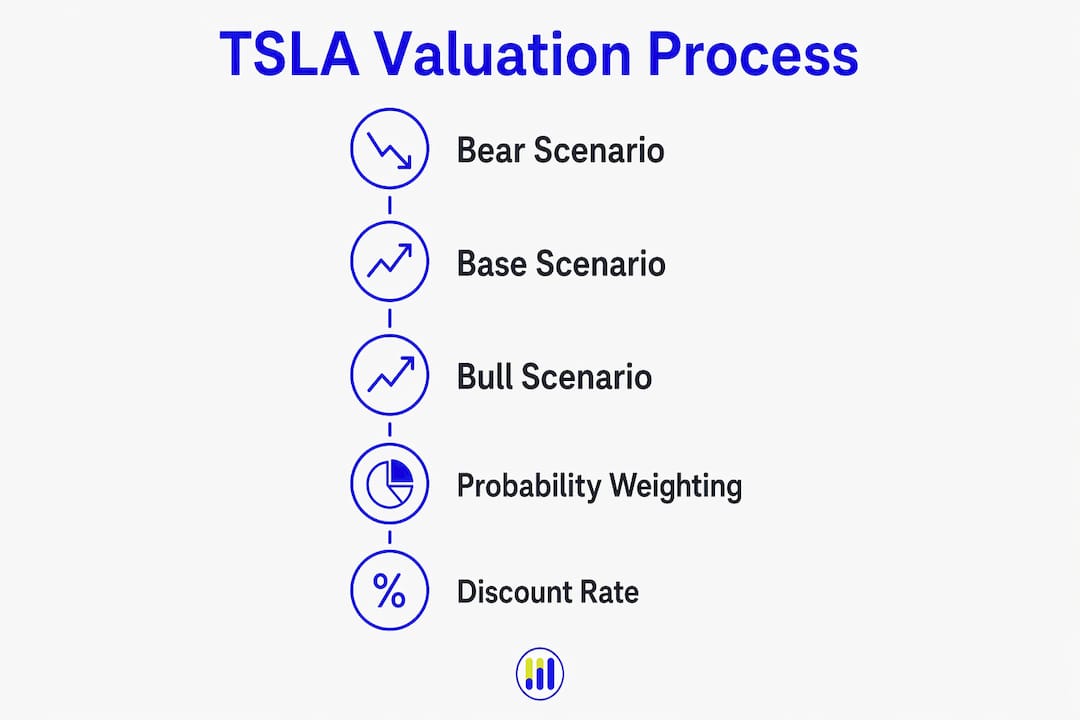
Pro Tip: When modeling Tesla’s intrinsic value, run your DCF with at least three margin scenarios: bear, base, and bull. A single-point estimate will mislead you given how sensitive the output is to small changes in assumptions.

Why do analysts produce a wide range of intrinsic value estimates for TSLA?
The spread in analyst estimates is not a sign of poor analysis. It reflects genuine structural uncertainty in the inputs that drive any discounted cash flow model.
- Terminal value dominates the output. Terminal value accounts for 60–80% of Tesla’s DCF intrinsic value. A one-percentage-point change in the assumed long-term growth rate can shift the output by tens of dollars per share.
- WACC sensitivity is extreme. The weighted average cost of capital (WACC) is the discount rate applied to future cash flows. Small changes in WACC, driven by interest rate assumptions or risk premiums, produce large swings in the final estimate.
- The bear-to-bull range is enormous. DCF models currently produce estimates ranging from $98 in a bear case to $459 in a bull case. That $361 spread is not a rounding error. It reflects fundamentally different views on whether Tesla’s robotaxi and robotics businesses will generate meaningful revenue.
- Unproven monetization paths. Prediction markets currently price a California robotaxi launch at 22% probability and an Optimus humanoid robot release at 10% probability. When core value drivers have a one-in-ten chance of materializing, point estimates become unreliable.
- CFA Institute valuation standards require analysts to disclose key assumptions and sensitivity ranges. Even under rigorous professional standards, Tesla’s valuation spread remains wide because the uncertainty is real, not methodological.
Professional analysts address this by using probability-weighted scenario modeling rather than a single DCF output. You should do the same.
How does Tesla’s current stock price compare to its intrinsic value estimates?
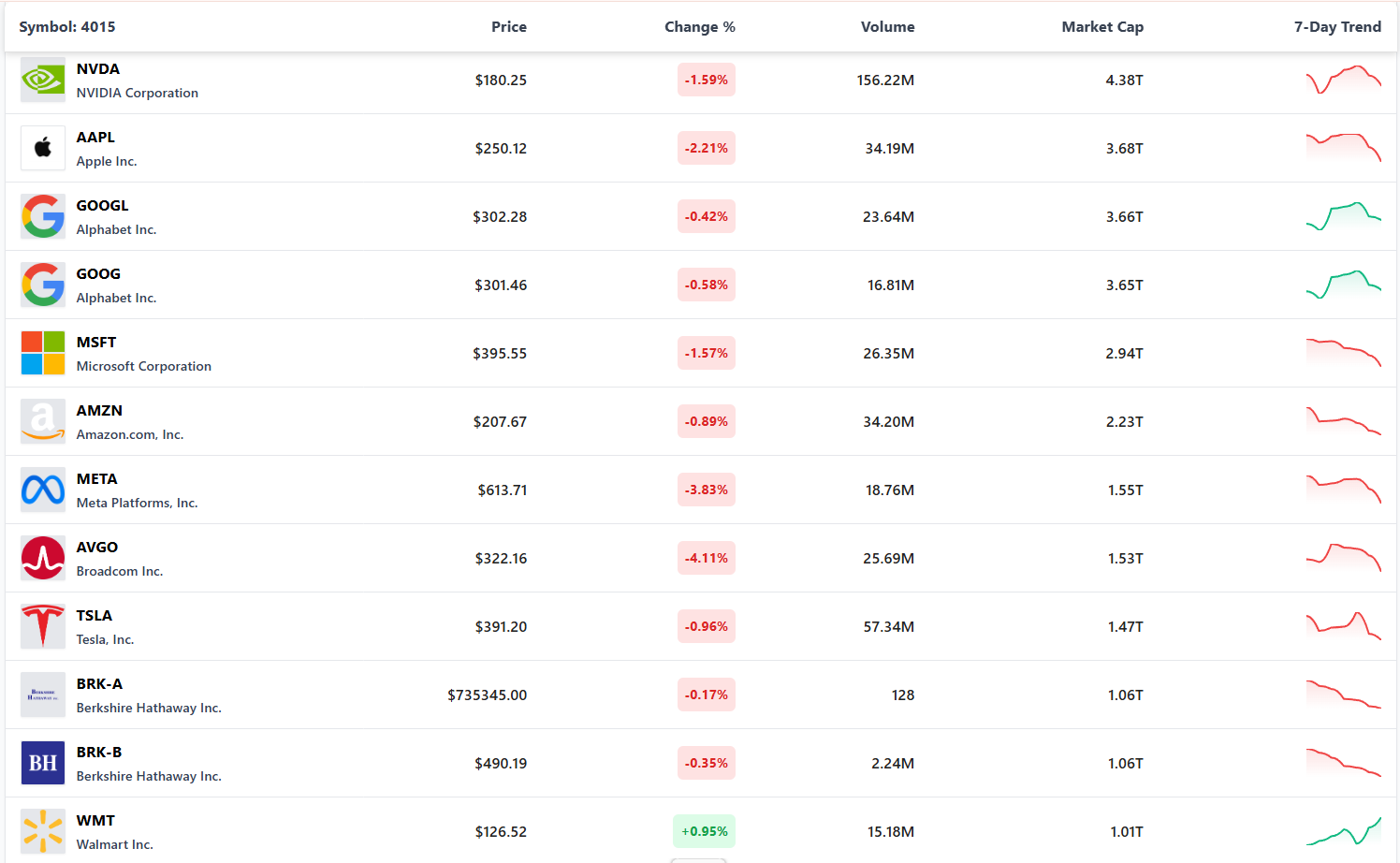
Tesla’s stock has been trading in the $390–$410 range, which sits at or above most DCF midpoints. That positioning tells a specific story about investor sentiment.
| Valuation reference | Estimate | Implication |
|---|---|---|
| Morningstar fair value | $400 per share | Stock is roughly fairly valued at current prices |
| DCF bear case | $98 per share | Significant downside if growth bets fail |
| DCF bull case | $459 per share | Upside exists only if robotaxi and robotics deliver |
| Trailing P/E ratio | 383x earnings | Market prices in decades of compounding growth |
| Margin of safety | Negative to near zero | Limited buffer against negative surprises |
Morningstar assigns Tesla a fair value of $400 with a 3-star rating and a narrow economic moat. The narrow moat designation means Morningstar believes Tesla has a competitive advantage, but not a wide one. The very high uncertainty rating is the more important signal. It means the $400 estimate carries a wide confidence interval, not a precise target.
For investors focused on margin of safety, the picture is uncomfortable. At $400, the margin of safety is approximately negative 29% relative to conservative DCF estimates. That means you are paying a premium over fundamental value and relying on growth optionality to justify the price. You can check how Tesla’s current price compares to its estimated fair value using Tickerplace’s valuation tool.
What do software and robotics mean for Tesla’s long-term valuation?
Tesla’s $1.48 trillion market cap is not a bet on selling cars. It is a bet on a high-margin software and robotics future that is not yet reflected in current fundamentals.
The bull case rests on three pillars:
- FSD as a recurring revenue engine. With 1.28 million active subscribers and 51% year-over-year growth, FSD is moving from a feature to a business. Software margins are structurally higher than automotive margins, which changes the long-term free cash flow profile significantly.
- Robotaxi network economics. If Tesla deploys a robotaxi fleet at scale, the revenue per vehicle could dwarf traditional car sales. The unit economics of autonomous ride-hailing, if achieved, would justify a much higher intrinsic value than any automotive-only model produces.
- Optimus humanoid robots. Tesla’s Optimus program targets the industrial labor market. The addressable market is enormous, but the timeline and probability of commercial success remain highly uncertain.
The bear case is equally coherent. Morningstar’s very high uncertainty rating reflects the fact that none of these businesses have proven they can generate the cash flows the market is pricing in. Regulatory approval, technology reliability, and competitive pressure from well-funded rivals all create execution risk.
Pro Tip: Treat Tesla’s software and robotics potential as a separate probability-weighted option in your analysis. Assign it a value only if you can articulate a specific scenario with a specific probability. Vague optimism is not a valuation input.
For a deeper look at how these growth drivers affect Tesla’s stock price, the TSLA stock analysis on Tickerplace covers the key factors in detail.
Key Takeaways
Calculating TSLA intrinsic value requires probability-weighted scenario modeling, not a single DCF estimate, because terminal value assumptions drive 60–80% of the output and small changes produce enormous swings in fair value.
| Point | Details |
|---|---|
| Intrinsic value definition | Tesla’s fair value equals discounted future cash flows across automotive, software, and robotics segments. |
| Financial strength is real | Tesla holds $44.7B in cash and posted a 21.1% automotive gross margin in Q1 2026. |
| Valuation range is wide | Bear case sits at $98; bull case reaches $459, reflecting genuine uncertainty about growth execution. |
| Market price vs. fair value | At $390–$410, Tesla trades near Morningstar’s $400 fair value but above conservative DCF estimates. |
| Software is the swing factor | FSD revenue grew 51% year over year; its long-term trajectory determines whether the premium is justified. |
Tickerplace’s take on valuing Tesla stock
Tesla is the hardest stock to value in the US market, and that is not an exaggeration. The automotive business is real, improving, and increasingly profitable. The software business is growing fast. But the market cap prices in a future that prediction markets assign a very low probability of materializing on any near-term timeline.
The mistake most individual investors make is anchoring to a single price target. A $400 fair value estimate from Morningstar and a $98 bear case from a DCF model are both defensible. They reflect different assumptions about the same company. The honest answer is that Tesla’s intrinsic value is a range, and where you land within that range depends on how much weight you give to robotaxi and robotics monetization.
Investor discipline here means two things. First, size your position according to the uncertainty, not the upside. Second, revisit your assumptions every quarter as new data arrives. Tesla’s financials are improving faster than most expected in early 2026. That matters. But a 383x P/E ratio means the market has already priced in a lot of that improvement and then some. The 2026 TSLA valuation analysis on Tickerplace walks through how these assumptions shift the output in practical terms.
— Tickerplace
Tickerplace tools for your Tesla valuation analysis
Tickerplace provides free, institutional-grade valuation tools built specifically for individual investors who want to do this analysis themselves.
The Intrinsic Value Calculator lets you model Tesla’s fair value using your own growth rate and discount rate assumptions, so you can see exactly how sensitive the output is to each input. The Stock Valuation Checker gives you an instant read on whether TSLA is trading above or below estimated fair value across multiple models. For investors building a position over time, the Stock Average Price Calculator tracks your cost basis as you add shares. All tools are free, updated daily, and cover 10,000+ US and ASX-listed equities.
FAQ
What is TSLA intrinsic value?
TSLA intrinsic value is the estimated present value of Tesla’s future cash flows, discounted at a rate reflecting investment risk. Current DCF models produce a range from roughly $98 in a bear case to $459 in a bull case.
Why does Tesla’s intrinsic value vary so much between analysts?
Terminal value accounts for 60–80% of Tesla’s DCF output, and small changes in growth rate or WACC assumptions produce large swings in the final estimate. Analysts also assign different probabilities to Tesla’s robotaxi and robotics monetization scenarios.
Is Tesla stock overvalued right now?
At $390–$410, Tesla trades near Morningstar’s $400 fair value estimate but above conservative DCF midpoints, with a margin of safety that is negative or near zero at current prices.
What is Tesla’s P/E ratio and what does it mean?
Tesla’s trailing P/E ratio is 383, with a PEG ratio of 6.23. Both figures indicate the market is pricing in decades of exceptional earnings growth, not current profitability.
How does FSD revenue affect Tesla’s valuation?
FSD subscription revenue reached $3.745 billion, up 51% year over year. Software revenue carries higher margins than automotive sales, which improves long-term free cash flow projections and supports higher intrinsic value estimates in bull-case models.