
What Is the Role of Financial Advisors in Your Financial Life?

The role of financial advisors is to translate your financial goals, retirement, a home purchase, your kids’ education, into a documented plan, and then manage the implementation and keep you disciplined enough to follow it. That is the job, stripped of jargon. Everything else, the meetings, the reports, the fee structures, exists to support that single function.
Two things separate a genuine advisory relationship from a sales conversation dressed up as one:
- Scope of practice. A full-service adviser typically covers retirement planning, investment strategy, tax-aware structuring, insurance and risk management, and estate planning, not just stock picks.
- Duty owed to you. Some advisers operate under a fiduciary standard, legally required to act in your best interest; others meet a lower suitability bar. MoneySmart’s guide to working with a financial adviser is a solid starting point for understanding what that distinction means in practice, and disclosure documents such as Form CRS exist specifically so you can compare advisers on this point before signing anything.
Key Takeaways
The role of financial advisors is to convert your financial goals into a documented, actively managed plan that combines investment strategy, tax awareness, and behavioral coaching over time.
| Point | Details |
|---|---|
| Core role | Advisers document your goals into a written plan and manage implementation and ongoing behavior. |
| Verify before hiring | Check license or authorization status, CFP designation, and FPA or equivalent professional membership. |
| Fee models vary | Common structures include AUM percentage, hourly, flat fee, and commission-based compensation. |
| Best-fit situations | Complex transitions, tax-aware planning, and behavioral discipline deliver the most measurable value. |
| Cross-check recommendations | Tools like Tickerplace’s valuation calculators let you independently verify an adviser’s assumptions before committing capital. |
What Do Financial Advisors Actually Do Day to Day?
Financial advisor duties break down into a handful of concrete workstreams, and the depth of each one is what separates a $2,000-a-year check-in service from a genuine planning relationship.
The process almost always starts with a discovery meeting, sometimes called a fact-find, where the adviser gathers your income, assets, debts, and goals. From there, the work typically includes:
- Building a written financial plan that sequences goals against your cash flow and time horizon.
- Managing or recommending a portfolio aligned to your risk tolerance.
- Modeling retirement income, including drawdown strategy and pension or superannuation timing.
- Structuring investments and contributions with tax consequences in mind.
- Reviewing insurance coverage, life, income protection, and health, for gaps or overlaps.
- Coordinating estate documents, wills, and beneficiary designations with your lawyer.
- Managing debt repayment and cash flow planning alongside investment goals.
- Referring you to accountants or estate attorneys when a matter falls outside their license.
Personal financial advisors, according to the Bureau of Labor Statistics, meet regularly with clients to discuss goals, recommend investments, monitor accounts, and deliver periodic reports. That monitoring piece matters more than most people expect. A plan built once and never revisited is closer to a static document than active advice.
The tangible outputs you should receive include a Statement of Advice (SoA) or equivalent planning document, a written fee disclosure, an investment policy or plan outlining your target allocation, and a review schedule stating how often you will meet.
Pro Tip: Ask to see a sample Statement of Advice before you engage anyone. A thin, three-page template with generic language signals a transactional relationship. A detailed SoA that references your specific goals, timeline, and risk profile signals genuine planning work.
How Should You Prepare for Your First Meeting?
Walking in with the right documents turns a vague introductory chat into a productive planning session, and it saves you a second unpaid meeting just to gather paperwork.
Before your first appointment, assemble:
- Photo ID and recent tax returns, if your situation involves self-employment or investment income.
- Superannuation or pension statements, plus any workplace retirement account summaries.
- Bank and investment account statements from the last three to six months.
- A list of debts, mortgage, credit cards, personal loans, with balances and interest rates.
- Existing wills, powers of attorney, and insurance policy documents.
- Pay stubs or a rough monthly budget covering income and expenses.
Beyond paperwork, arrive with a short list of specific goals rather than a vague sense that you “should get organized.” Retiring at 60 with a target income, buying a second property within five years, or funding a child’s education are the kind of concrete targets an adviser can actually plan around.
It also pays to bring a list of questions: How do you charge? What licenses do you hold? Can I see a sample plan for someone in a similar situation? Who has access to my data and custody of my assets?

Pro Tip: If your records are scattered or incomplete, don’t delay the meeting waiting to perfect them. Bring what you have and be upfront about the gaps. A competent adviser will tell you exactly what’s missing and how to get it, which is faster than guessing on your own.
What Happens at the First Meeting and What Comes After?
The first meeting typically covers three things: fact-finding, goal-setting, and agreeing on scope. You’re not getting investment recommendations in this session. You’re establishing whether the adviser understands your situation and whether the relationship fits.
The advice process generally unfolds in four stages:
- Discovery. The adviser collects financial data and clarifies goals, risk tolerance, and time horizon. This can take one meeting or two, depending on complexity.
- Statement of Advice. The adviser prepares a formal, written recommendation covering strategy, products, fees, and rationale. For straightforward cases this might take one to two weeks; for complex situations involving business ownership or multiple entities, expect four to eight weeks.
- Implementation. Depending on the arrangement, the adviser executes trades and account transfers directly, or you execute based on their recommendations. Full implementation, opening accounts, transferring assets, adjusting insurance, commonly takes another two to six weeks.
- Ongoing review. Once the plan is live, you shift into a review cycle, discussed further below.
By the end of implementation, you should have copies of the SoA, confirmation of any new accounts or policies, and a written summary of what changed and why. If you leave the process without a paper trail, that’s a gap worth raising immediately.
Your concrete next steps after the first meeting: confirm the scope of engagement in writing, request the fee disclosure if you haven’t received it, and calendar your first review date before you leave.
How Do Financial Advisors Charge, and Where Do Conflicts Hide?
Advisers get paid through a handful of common models, and the model itself often signals where incentives might pull against your interests.
The main structures, per Investopedia’s breakdown of financial advisor duties, are:
- Percentage of assets under management (AUM). Typically around 1% annually, scaling down for larger portfolios. This aligns incentives reasonably well since the adviser earns more only as your assets grow.
- Hourly rates. Common for one-off planning engagements rather than ongoing management, useful if you want advice without ongoing portfolio oversight.
- Flat or project fees. A fixed cost for a defined deliverable, such as a retirement plan or a one-time review.
- Commissions. Paid by the product provider, insurance policies and certain managed funds still carry commission structures in some cases, which is exactly where conflicts of interest tend to surface.
For comparison, robo-advisors charge roughly 0.25% to 0.50% annually for automated portfolio management, a useful benchmark when you’re weighing whether a human adviser’s fee is buying you genuinely more value. Fee structures vary enough that some advisers blend models, charging AUM for ongoing management and a flat fee for the initial plan.
Commission-based compensation and referral incentives are the two most common sources of conflict. An adviser paid to sell a specific insurance product or in-house fund has a built-in reason to favor it, even when a cheaper alternative would serve you better.

Pro Tip: Three fee red flags worth watching: no written fee disclosure before you sign anything, reluctance to explain how commissions factor into recommendations, and pressure to move quickly on a proprietary product. Any one of these is worth a direct follow-up question.
What Credentials and Regulatory Checks Actually Matter?
Before engaging anyone, confirm their license or authorization, their professional qualifications, and their standing on a public regulator register. This is the single fastest way to filter out unqualified operators.
Specifically, ask for or independently verify:
- License or authorization details, including the specific registration or authorization number tied to their firm.
- Professional designations such as Certified Financial Planner (CFP), which requires ongoing education and ethics standards.
- Membership in a recognized professional body, such as the Financial Planning Association (FPA).
- Standing on the relevant regulator’s public register, confirming the license is active and free of disciplinary history.
A registered investment adviser (RIA) is a specific legal designation, and RIAs typically register with a securities regulator. Disclosure documents like Form CRS exist precisely so you can compare advisers on services, fees, and conflicts side by side rather than taking a pitch at face value.
The distinction between fiduciary and suitability standards isn’t academic. A fiduciary must recommend what’s best for you, even if a lower-commission product exists. A suitability standard only requires the recommendation to be appropriate, which leaves room for a costlier option to still pass the bar.
Ask directly whether the adviser acts as a fiduciary for all the services they provide to you, not just some of them. Some firms operate as fiduciaries for financial planning advice but shift to a suitability standard when selling insurance products through a separate license.
When Does Hiring an Advisor Pay Off, and Where Are the Limits?
Advisors deliver the most value during complex transitions, retirement, inheritance, business sale, divorce, and in ongoing tax-aware planning where mistakes are expensive and hard to reverse.
The measurable upside is real. Fidelity cites industry research suggesting professional financial advice can add up to about 4.87% to portfolio returns over the long term, though the exact figure depends heavily on the study period and methodology used. A meaningful chunk of that value doesn’t come from stock selection at all. It comes from behavioral coaching, an adviser talking a client out of selling everything during a market drop, or stopping them from chasing a hot stock tip. That coaching function is easy to underestimate until you’ve lived through a volatile quarter without a plan to anchor you.
The limits are just as real:
- Cost. A 1% annual AUM fee compounds meaningfully over decades and needs to be weighed against the value delivered.
- Conflicts. Even well-intentioned advisers operating under commission-influenced models carry structural bias.
- Inconsistent scope. Not every “adviser” offers full financial planning; some are effectively product salespeople with a broader title.
If your situation is straightforward, a stable job, modest savings, no business ownership or complex estate, a lower-cost robo-advisor or a DIY approach using solid research tools may cover your needs without the ongoing fee. Complexity is usually the deciding factor, not portfolio size alone.
How Do You Choose the Right Financial Advisor?
Choosing well comes down to six criteria: scope match, fee alignment, credentials, track record, communication style, and how they handle your data and account access.
Bring a specific set of questions to any interview:
- How do you charge, and can you show me a full fee disclosure in writing?
- What’s your typical client profile, and do you have a minimum asset requirement?
- Can I see a sample Statement of Advice for someone in a similar situation to mine?
- Are you a fiduciary for all the services you’re recommending to me?
- Who custodies my assets, and how do I access my accounts directly?
- How often will we meet, and what triggers an off-cycle review?
Watch for clear red flags: no written fee disclosure, a vague or shifting description of scope, or pressure toward proprietary in-house products with no comparison to alternatives.
Different adviser types suit different needs, and the terminology overlaps enough that it’s worth confirming directly rather than assuming based on title, a point Swinburne’s comparison of financial planners and advisers makes clearly.
| Advisor Type | Best For | Typical Fee Model | Typical Services |
|---|---|---|---|
| Independent registered adviser | Comprehensive, ongoing planning | AUM percentage or flat fee | Full planning: retirement, tax, estate, insurance |
| Broker or stockbroker | Transactional investment execution | Commission per trade | Trade execution, limited planning |
| CFP-certified planner | Holistic life-stage planning | AUM, flat fee, or hourly | Retirement, tax-aware investing, estate coordination |
How Do You Keep Your Plan on Track or End the Relationship?
Most advisers propose review meetings ranging from quarterly to annual, and each review should cover performance against your goals, changes in your life circumstances, and whether the original plan assumptions still hold.
Specific triggers should prompt an off-cycle review regardless of your regular schedule:
- A major life event: marriage, divorce, a new child, job loss, or inheritance.
- Performance that meaningfully diverges from your plan’s projections.
- A fee structure that no longer feels justified by the value delivered.
- A shift in your risk tolerance or time horizon.
Document every change in writing. A verbal agreement to adjust your allocation or increase contributions means nothing if a dispute arises later; an updated SoA or written confirmation protects both sides.
If you decide to end the relationship, check your agreement for termination clauses and notice periods first. Most advisory agreements allow termination with 30 days’ written notice, though this varies by firm. Confirm how your data and account custody transfer, request copies of all planning documents and reports, and get written confirmation once assets have moved to a new custodian or adviser. Moving too fast without this paper trail is how people lose track of cost basis records and historical statements they’ll need later for tax purposes.
How Do Advisors Analyze Investments Before Recommending Them?
Advisers typically lean on multi-model valuation, discounted cash flow (DCF), price-to-earnings (P/E) ratios, and EV/EBITDA comparisons, paired with scenario analysis to stress-test assumptions under different market conditions.
Each method answers a different question, and none of them work well in isolation:
| Method | What It Reveals | Typical Inputs |
|---|---|---|
| Discounted cash flow (DCF) | Intrinsic value based on projected future cash flows | Growth rate, discount rate, terminal value assumptions |
| P/E ratio | Relative valuation against earnings and peer companies | Current price, earnings per share, sector average |
| EV/EBITDA | Valuation independent of capital structure differences | Enterprise value, operating earnings |
| Scenario analysis | Range of outcomes under different market conditions | Bull, base, and bear case assumptions |
You don’t need to build these models from scratch to have an informed conversation with your adviser. Reviewing a company’s financial statements, balance sheet trends, cash flow patterns, debt levels, before a meeting gives you a much sharper sense of whether a recommendation holds up. Free tools including stock valuation calculators and DCF models let you run your own rough numbers and compare them against what an adviser presents.
Each method has real limits. DCF is highly sensitive to growth and discount rate assumptions, small changes swing the output dramatically. P/E comparisons only work when you’re comparing genuinely similar companies. Scenario analysis is only as good as the range of scenarios someone bothers to model. Tax treatment of capital gains and dividend income also shifts the after-tax return calculus, so a valuation that looks attractive pre-tax can look different once your specific tax situation is factored in, another reason advisers frequently loop in an accountant, and a resource like this guide to tax planning strategies is useful background if you want to understand that coordination better.
A Note on Advising as a Long-Term Relationship
Documentation and review cadence matter more than most people expect going in. A plan that exists only as a verbal understanding from one meeting three years ago is functionally no plan at all; markets shift, life circumstances change, and without a written record to measure against, neither you nor your adviser can tell whether the strategy is actually working. The advisers who deliver the most value are the ones who insist on writing things down and revisiting them on a real schedule, not the ones with the flashiest pitch. It’s also worth treating any adviser’s numbers as a starting point rather than gospel. Tools like Tickerplace exist specifically so you can independently check the valuation assumptions behind a recommendation before committing capital to it.
Use Valuation Tools to Sanity-Check Any Advisor’s Recommendation
You can verify the key assumptions behind almost any investment recommendation using the same valuation frameworks advisers rely on, DCF, P/E, and P/S models, without needing a finance degree to run them.
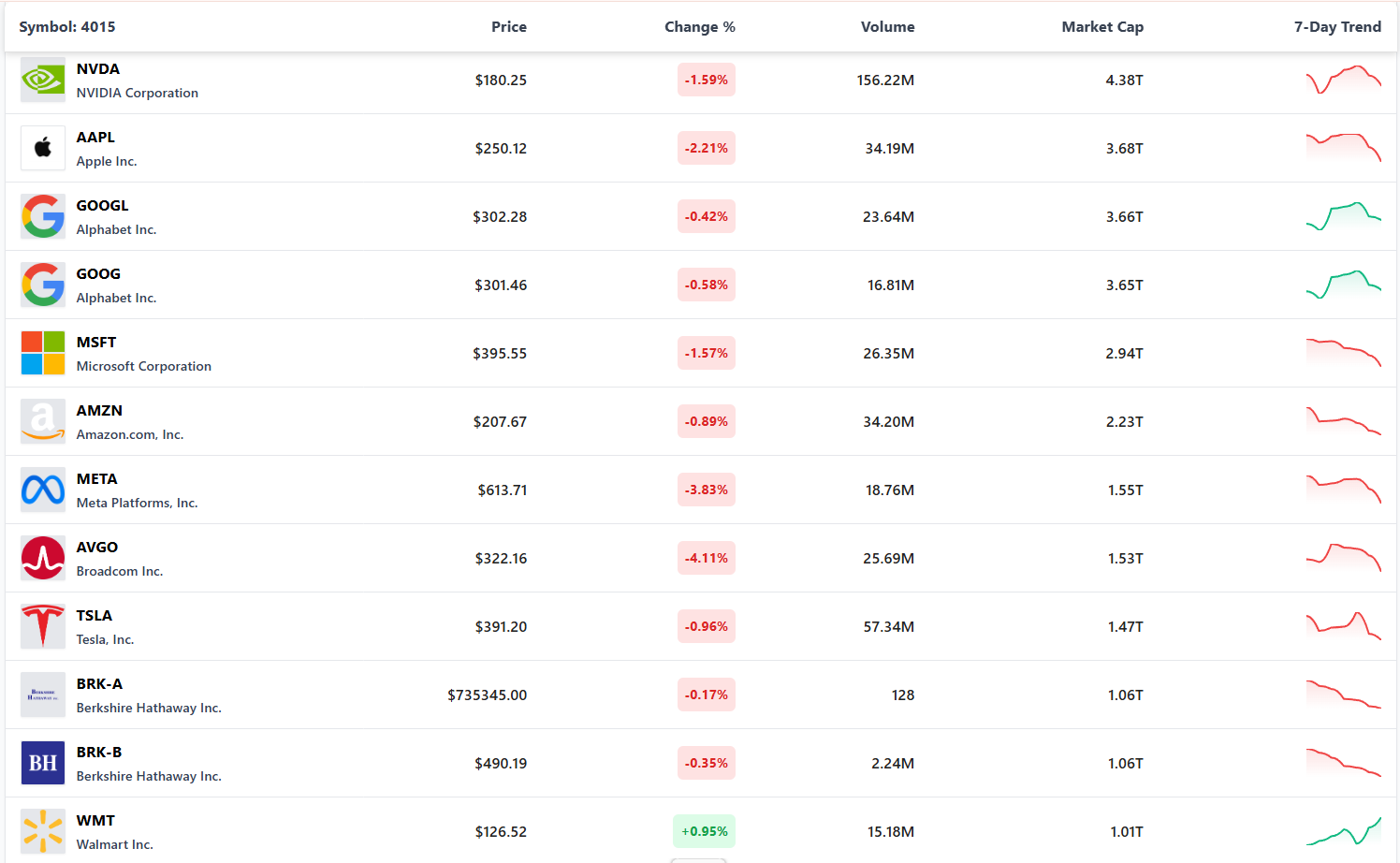
If your adviser recommends a specific stock or fund holding, Tickerplace’s stock valuation checker shows you whether that position screens as overvalued or undervalued based on current fundamentals, covering more than 10,000 US and ASX-listed companies updated daily. The intrinsic value calculator lets you plug in your own growth and discount rate assumptions to see how sensitive a recommendation’s fair value estimate really is, a useful exercise before your next review meeting. None of this requires a paid account to get started; the core valuation tools are free to use. Run a ticker through the checker before your next appointment and bring the output as a discussion point.
Where Can You Verify an Advisor or Learn More?
A handful of public resources let you confirm credentials and compare advisers before you commit to a relationship.
- MoneySmart explains what to expect when working with a financial adviser and how to check their standing.
- Regulator registers let you confirm whether a license or authorization is active and free of disciplinary action, always check before your first meeting.
- Form CRS, required for US-registered advisers, standardizes fee and conflict disclosures so you can compare firms side by side.
- Professional bodies such as the Financial Planning Association (FPA) maintain directories of certified members, useful for confirming CFP status.
- Financial calculators give you an independent way to model retirement drawdowns, valuations, and returns before or after any adviser meeting.
This article is general information, not a substitute for advice from a qualified financial advisor. Consult a qualified financial professional about your own circumstances before acting on anything here.
Sources
- Working with a financial adviser
- What Does a Financial Advisor Do?
- Why hire a financial advisor | Fidelity
- Personal Financial Advisors : Occupational Outlook Handbook
FAQ
What is the main role of a financial advisor?
The main role is to turn your financial goals into a documented plan covering investments, retirement, tax-aware strategies, insurance, and estate planning, then manage implementation and keep you on track through regular reviews.
What are the roles and responsibilities of a financial advisor?
Core responsibilities include discovery and goal-setting, building a written financial plan, managing or recommending investments, coordinating tax and estate strategy, and delivering ongoing reports and reviews, as outlined by the Bureau of Labor Statistics.
What is the normal fee for a financial advisor in Australia?
Is $200,000 enough to work with a financial advisor?
Many advisers work with clients at this level, though some firms set higher minimums for ongoing AUM-based management; a flat-fee or hourly engagement is often available regardless of portfolio size, so ask directly about minimums during your first conversation.
How can I check an advisor’s recommendations independently?
Free tools such as Tickerplace’s stock valuation checker and intrinsic value calculator let you test the assumptions behind a specific stock recommendation using the same DCF and P/E frameworks advisers rely on.