
CBA Share Prices in 2026: What Investors Need to Know

TL;DR:
- CBA shares are valued at a premium due to franchise strength and dividend reliability, but the high multiples limit near-term upside.
- Current prices hover around $164.76, below recent highs, with analyst outlooks cautious amid macroeconomic challenges.
Commonwealth Bank of Australia (CBA) shares are defined by a premium valuation that reflects franchise quality, dividend reliability, and dominant retail banking market share, yet the current share prices CBA investors face demand careful scrutiny. Trading near $164.76 on the ASX, CBA sits well below its 52-week high of $192.00 but comfortably above its $146.97 low, with price-to-earnings multiples that exceed historical norms by a wide margin. For investors weighing income, capital growth, and risk, understanding the mechanics behind CBA’s valuation is the starting point for any sound decision.

1. Current CBA share prices and where they sit today
CBA shares are trading around $164.76, placing the stock roughly 14% below its 52-week high of $192.00 and approximately 12% above its 52-week low of $146.97. That range tells a story of significant volatility for a stock widely regarded as a defensive blue chip, comparable to the high-value chips in poker that anchor a serious player’s stack.
The Commonwealth Bank share value on the ASX is supported by strong liquidity, with daily trading volumes that make it one of the most actively traded equities in Australia. This liquidity reduces execution risk for both retail and institutional investors, though it does not insulate the stock from macro-driven sell-offs.
| Metric | Value |
|---|---|
| Current share price (approx.) | $164.76 |
| 52-week high | $192.00 |
| 52-week low | $146.97 |
| P/E ratio FY26 | 25.2x |
| P/E ratio FY27 | 23.4x |
Key characteristics of CBA’s current trading profile:
- High daily liquidity on the ASX, reducing bid-ask spread risk
- Price sits in the lower half of its 52-week range, reflecting post-budget sentiment
- Market capitalization remains among the largest of any ASX-listed company
2. How the May 2026 Federal Budget triggered a sell-off and recovery
The May 2026 Federal Budget introduced tax changes that directly affected major Australian bank earnings forecasts, triggering a mid-May sell-off across the sector. CBA was not spared. Analysts at Macquarie, Morgan Stanley, and JPMorgan each revised earnings estimates downward, and the share price fell sharply in the days following the budget announcement.
The recovery was notable. CBA shares recovered 7.11% from the May 13 close to late May, demonstrating that institutional buyers viewed the sell-off as an overreaction. This kind of rapid recovery is characteristic of high-quality franchises where the underlying earnings power remains intact despite short-term headwinds.
For investors tracking CBA share price history, this episode reinforces a recurring pattern: macro-driven dips in CBA tend to attract buyers who prioritize the stock’s defensive qualities over short-term noise. The May 2026 budget impact on Australian banks was broad, but CBA’s recovery pace outpaced several peers.
3. What valuation multiples say about CBA in 2026
CBA currently trades at 25.2x FY26 and 23.4x FY27 estimated earnings, multiples that place it firmly in growth stock territory despite being a mature retail bank. The historical average P/E of 17.3x provides the sharpest context: CBA is trading at roughly 35% above its long-run average multiple, meaning a significant portion of its quality and stability is already priced in.
| Valuation metric | CBA 2026 | Historical average |
|---|---|---|
| P/E ratio | 25.2x (FY26) | ~17.3x |
| EPS growth expectation | Mid-single-digit | N/A |
| Peer comparison | Premium to domestic banks | Inline with historical premium |
CBA trades like a technology growth stock despite mid-single-digit earnings per share growth expectations. This disconnect between growth rate and valuation multiple is the central tension every investor must resolve before deciding to buy CBA shares today.
Pro Tip: When evaluating whether CBA’s premium is justified, compare its P/E to both domestic peers like NAB and Westpac and to the broader ASX 200 financials index. A bank trading at 23x forward earnings needs a clear earnings growth catalyst to sustain that multiple.
4. CBA dividend yield and income potential
CBA pays two fully franked dividends annually with consistent reliability over more than a decade, making it a cornerstone holding for income-focused portfolios. Fully franked dividends carry attached tax credits that can significantly enhance after-tax returns for Australian resident investors, particularly those in lower tax brackets or self-managed superannuation funds.
Projected dividends and yields for the coming fiscal years:
- FY26 projected dividend: $5.15 per share (fully franked), yielding approximately 3.1%
- FY27 projected dividend: $5.45 per share (fully franked), yielding approximately 3.3%
- FY25 actual dividend: $4.86 per share, confirming a consistent upward trend
The dividend yield of 3.1% to 3.3% is competitive for a blue chip stock, though it faces a genuine challenge from term deposit rates in 2026’s interest rate environment. Investors seeking pure income must weigh whether the franking credits and potential capital appreciation justify holding CBA over a risk-free term deposit offering comparable gross returns.
Statistic callout: CBA’s projected FY27 dividend of $5.45 represents a 12.1% increase over the FY25 actual payout of $4.86, signaling management confidence in earnings sustainability despite near-term headwinds.
5. Analyst forecasts and the CBA share price outlook
The CBA share price forecast from major brokers reflects a cautious consensus. Following the May 2026 budget, analysts including Macquarie, Morgan Stanley, and JPMorgan downgraded earnings estimates, citing tax headwinds, intensifying mortgage competition, and concerns about credit quality as the Australian economy cools.
Key factors shaping the current analyst outlook:
- Mortgage market competition is compressing net interest margins across the major banks
- Credit quality deterioration risk rises as higher-for-longer interest rates pressure household balance sheets
- Tax changes from the May 2026 budget reduce after-tax earnings, directly affecting dividend capacity
- Target price consensus has shifted lower across most major brokers since April 2026
“CBA is a hold at current valuation. The franchise quality is undeniable, but the price already reflects that quality and then some.” This sentiment, echoed across multiple broker notes, captures the cautious hold stance that defines institutional positioning on CBA today.
6. Key risks and opportunities for CBA investors
Understanding the risk profile of CBA shares is as important as understanding the return potential. The stock’s premium valuation creates a specific vulnerability: any earnings miss or margin compression can trigger outsized price declines because the market has already priced in a high-quality outcome.
- Valuation risk: At over 23x FY27 earnings, CBA has limited margin of safety. A re-rating toward the historical 17.3x average would imply a material price decline even if earnings hold steady.
- Earnings growth challenge: Mid-single-digit EPS growth does not typically support a 23x multiple. Sustaining the premium requires CBA to defend margins and maintain credit quality in a competitive and economically uncertain environment.
- Dividend reliability as a buffer: The consistent fully franked dividend history provides a floor for income investors and limits downside selling pressure from that cohort.
- Opportunity cost: With term deposit rates competing with CBA’s dividend yield, investors must justify the equity risk premium they accept by holding shares over a guaranteed return instrument.
- Upside catalyst: An unexpected improvement in the Australian economy, a faster-than-expected rate cut cycle, or a positive earnings surprise could re-rate CBA toward its recent highs above $190.
Pro Tip: For investors considering how to invest in CBA, position sizing matters as much as entry price. Given the valuation premium, a partial position that allows averaging down on macro-driven dips is a more disciplined approach than a full allocation at current levels.
Key takeaways
CBA’s premium valuation is justified by franchise quality and dividend reliability, but the gap between its current P/E of 25.2x and its historical average of 17.3x limits near-term upside for new investors.
| Point | Details |
|---|---|
| Current trading range | CBA trades near $164.76, within a 52-week range of $146.97 to $192.00. |
| Valuation premium | P/E of 25.2x FY26 is roughly 35% above the historical average of 17.3x. |
| Dividend income | Projected fully franked dividends of $5.15 (FY26) and $5.45 (FY27) yield 3.1% to 3.3%. |
| Analyst consensus | Major brokers including Macquarie and Morgan Stanley rate CBA a cautious hold. |
| Primary risk | Earnings miss or margin compression could trigger a sharp re-rating given the stretched multiple. |
Tickerplace’s view on CBA in 2026
At Tickerplace, we track hundreds of ASX-listed equities, and CBA consistently stands out as the stock where investor expectations and market reality are most visibly in tension. The franchise is genuinely exceptional. CBA’s digital banking ecosystem, retail deposit base, and mortgage market dominance are not easily replicated by domestic or international competitors. That quality deserves a premium.
What concerns us is the size of that premium. A P/E above 23x for a bank growing earnings in the mid-single digits is a bet that nothing goes wrong. In an environment where the May 2026 budget has already clipped earnings forecasts and mortgage competition is intensifying, that is a demanding assumption. We would not reduce a long-held CBA position for income-focused investors, as the franked dividend stream remains one of the most reliable on the ASX. We would, however, be cautious about initiating a full position at current levels without a clear plan for adding on weakness.
The scenario that changes our view is a meaningful rate cut cycle that relieves household pressure, reduces mortgage arrears risk, and supports net interest margins. If that materializes faster than the market expects, CBA above $180 becomes defensible again. Until then, the CBA valuation analysis points to patience as the most rational posture.
— Tickerplace
Track CBA shares with Tickerplace
Tickerplace gives you the data infrastructure to monitor Commonwealth Bank shares with the depth that investment decisions require.
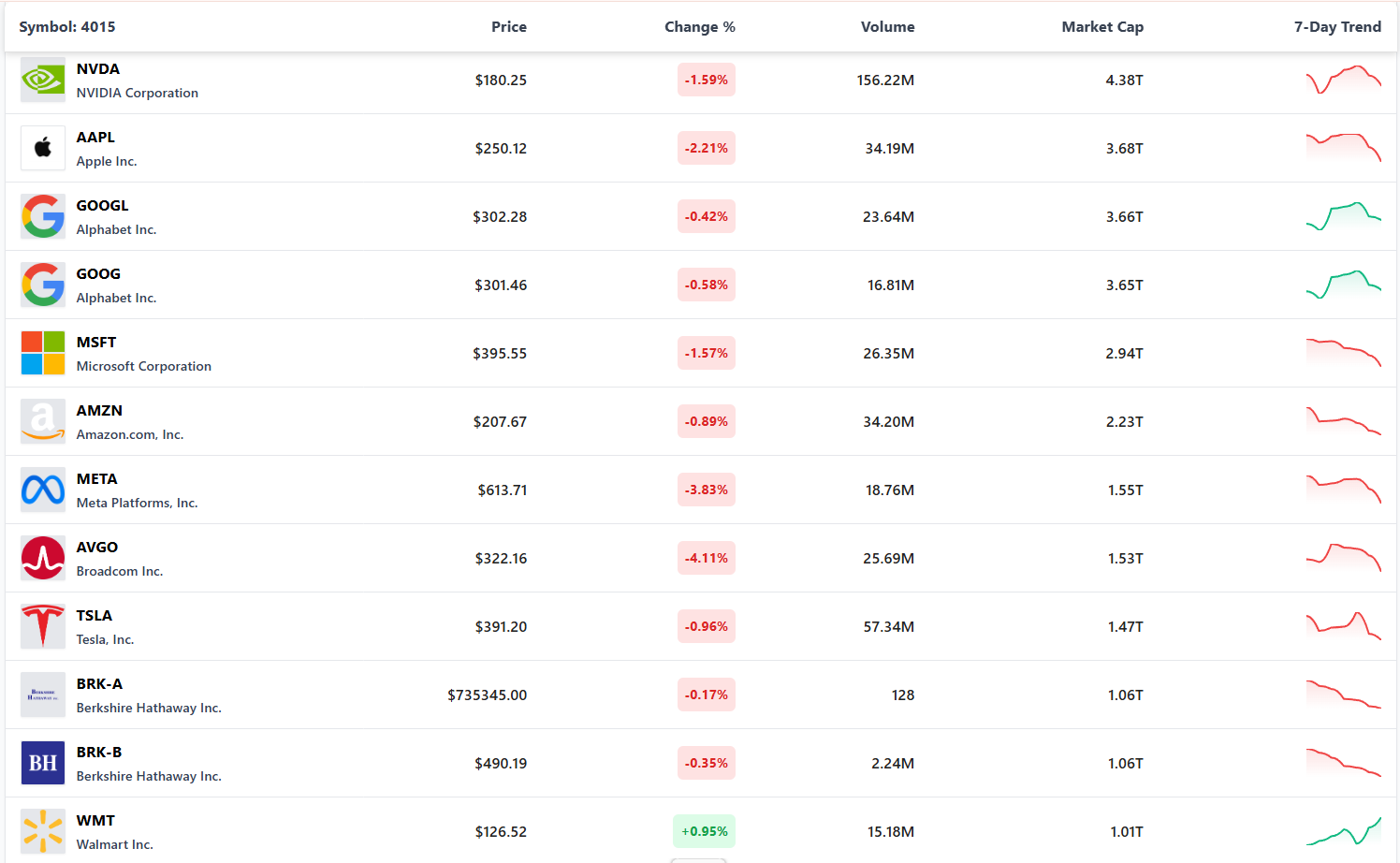
Access real-time CBA share prices, historical price charts, and financial statements through Tickerplace’s research platform, where you can also review analyst consensus summaries and target price histories in one place. For investors who want to compare CBA against NAB, Westpac, and ANZ on metrics like P/E ratio, dividend yield, and earnings growth, the stock screener lets you filter and rank Australian bank stocks by any financial criteria you define. Whether you are monitoring an existing position or evaluating a new entry point, Tickerplace provides the data accuracy and analytical depth to support every stage of your research process.
FAQ
What is the current CBA share price?
CBA shares are trading near $164.76, within a 52-week range of $146.97 to $192.00 on the ASX.
What is the CBA dividend yield for 2026?
CBA’s projected fully franked dividend yield is approximately 3.1% for FY26 and 3.3% for FY27, based on projected dividends of $5.15 and $5.45 per share respectively.
Is CBA overvalued at its current price?
CBA trades at 25.2x FY26 earnings, well above its historical average P/E of 17.3x, which indicates the stock’s quality is largely priced in and limits near-term upside.
What do analysts say about the CBA share price forecast?
Major brokers including Macquarie, Morgan Stanley, and JPMorgan have issued cautious hold ratings following May 2026 earnings downgrades, citing mortgage competition and tax headwinds as key concerns.
How can I invest in CBA shares?
CBA shares trade on the ASX under the ticker CBA and are accessible through any Australian brokerage account; investors should review current valuation metrics and their income objectives before initiating a position.