
Santos Share Price in 2026: What Investors Must Know

TL;DR:
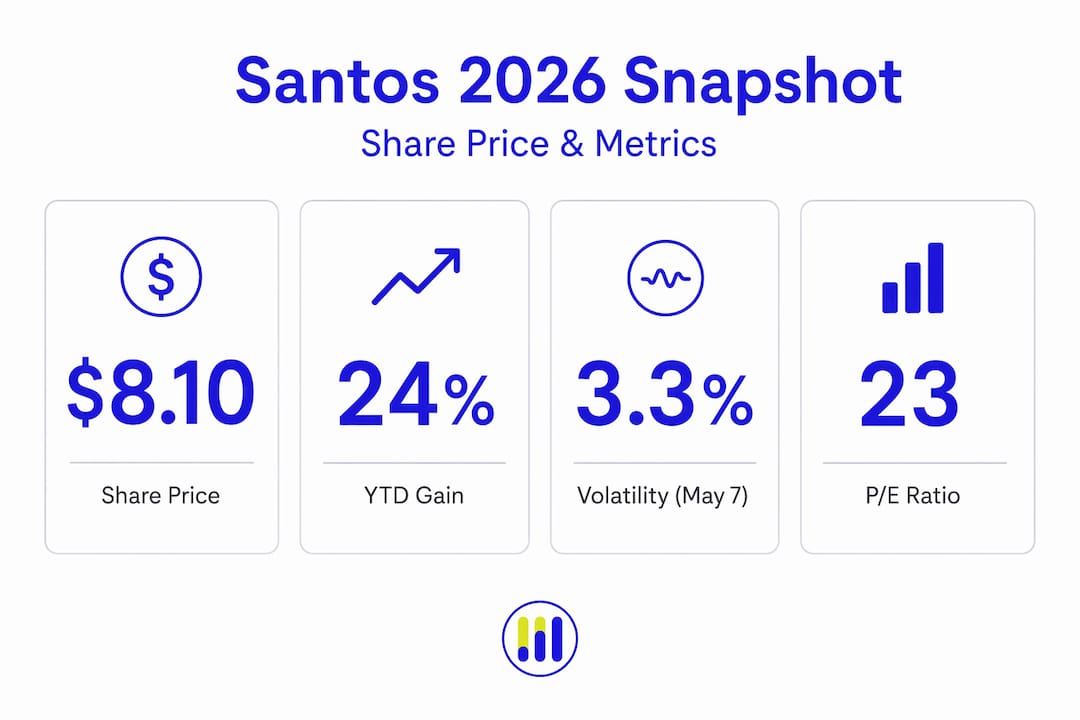
- Santos shares have risen 24% year-to-date, driven by higher oil prices, increased production, and strong analyst support.
- Despite volatility risks, its low breakeven point and positive cash flow outlook make it a compelling long-term investment in the energy sector.
The Santos share price has delivered one of the more compelling stories on the ASX this year, rising 24% year-to-date and sitting around $8.10 per share as of mid-2026. That kind of performance demands attention, particularly from investors who watch energy stocks closely. But price alone tells only part of the story. Understanding what is driving this momentum, where the risks sit, and how the financials hold up under scrutiny is what separates an informed position from a speculative one. This article covers all of it.
Key Takeaways
| Point | Details |
|---|---|
| Strong year-to-date gains | Santos shares are up 24% year-to-date and 39% over 12 months, reflecting improved fundamentals. |
| Production growth supports price | FY26 production guidance of 101–111 million barrels underpins cash flow and valuation confidence. |
| Low breakeven protects returns | A cash flow breakeven of $45–$50 per barrel gives Santos resilience against oil price swings. |
| Analyst consensus is bullish | 11 of 14 analysts rate Santos as a buy, with an average price target of $8.47. |
| Volatility remains a real risk | A 3.3% single-day drop in May 2026 illustrates that short-term price swings should be factored in. |
What’s driving the Santos share price in 2026
Several converging forces explain why Santos stock trends have been notably positive this year, and why they remain worth monitoring closely.
-
Oil price sensitivity. The Santos share price has a direct relationship with global crude prices. WTI crude fluctuations between $91 and $115 per barrel, driven by Middle East supply disruptions, have pushed energy equity valuations higher across the board. Santos is no exception. When oil prices rise, revenue projections improve, which tends to move the stock upward.
-
Production ramp-up. FY25 Q4 production jumped 15% from the prior quarter, and the company has guided for FY26 output of 101 to 111 million barrels of oil equivalent. Greater production volume directly improves revenue capacity and strengthens the investment case.
-
Cash flow improvement. Quarterly cash flow reached approximately $380 million, with full-year cash flow near $1.8 billion. That level of cash generation supports dividends, debt reduction, and capital reinvestment.
-
Analyst sentiment. Market confidence matters. 11 of 14 analysts rate Santos as a buy or strong buy, with a consensus price target of $8.47 and some forecasts reaching $10.17. When institutional analysts align this strongly, it reflects confidence in the underlying business.
-
Execution and geopolitical risks. Despite the positive backdrop, LNG project execution risks remain a real concern. Delays or cost overruns at key projects could weigh on near-term share price performance.
Pro Tip: Set price alerts at the 52-week high and low thresholds so you can react to breakouts or breakdowns without having to watch the ticker constantly.
Santos share price history and recent trends
Understanding Santos share price history gives you the context to judge whether the current price represents fair value or a stretched valuation.
The 52-week trading range sits between $5.77 and $8.19, which reveals just how much ground Santos shares have covered in a single year. A stock that trades from below $6.00 to above $8.00 in twelve months is exhibiting the kind of volatility that creates genuine opportunities, but it also demands respect. The price/earnings ratio sits around 23, and the dividend yield is near 2.93%, making Santos an equity that offers both growth and income characteristics.
The table below captures key reference points for Santos equity performance over recent periods:
| Metric | Value |
|---|---|
| Current share price (approx.) | $8.10 AUD |
| 52-week low | $5.77 AUD |
| 52-week high | $8.19 AUD |
| Year-to-date change | +24% |
| 12-month change | +39% |
| P/E ratio | ~23 |
| Dividend yield | ~2.93% |
| Market capitalization | ~$26.3 billion AUD |
One data point that illustrates the volatility profile clearly: on May 7, 2026, Santos shares fell 3.3% in a single session, dropping from $7.89 to $7.63 AUD. That kind of intraday movement is not unusual for energy stocks, but it underscores the importance of position sizing and entry timing.
Pro Tip: When reviewing Santos share price history on a chart, zoom out to a 3-year view. This gives you a more reliable picture of the stock’s actual support and resistance levels than a 30-day chart ever will.
Reading the financial indicators that matter
Santos stock analysis goes beyond price charts. The financial metrics underneath the share price tell you whether the company is performing and whether the current valuation makes sense.

The P/E ratio of approximately 23 places Santos at a moderate premium relative to some ASX peers, but it reflects the market’s expectation of continued earnings growth tied to higher production volumes. For context, a P/E in the low-to-mid twenties for a major energy producer with growing cash flows is not unreasonable, particularly when production guidance is pointing upward.
Cash flow metrics deserve particular attention here. A cash flow breakeven price of $45 to $50 per barrel means Santos can generate positive free cash flow even in a significantly weaker oil price environment. This is the metric that separates resilient energy producers from fragile ones. If WTI crude stays above $60, Santos generates cash. That matters enormously when you are evaluating downside risk.
Several additional metrics are worth tracking:
- Enterprise value accounts for the total cost to acquire a company including debt, and it provides a more complete valuation picture than market capitalization alone.
- Dividend yield at 2.93% adds an income dimension that pure growth investors sometimes overlook. For investors who hold Santos long-term, that yield compounds meaningfully.
- Analyst price targets function as a directional signal. The gap between the current price and the average analyst target of $8.47 is narrow, but the upper-end forecast of $10.17 suggests room for upside if production milestones are met.
- Revenue and earnings trends in quarterly reports are the earliest indicators of whether production gains are actually flowing through to the bottom line.
Santos vs. other ASX energy stocks
Contextualizing the Santos share price against sector peers helps investors understand whether the stock’s performance reflects company-specific strength or simply a rising tide for all energy names. You can also explore Woodside’s 2026 performance as a useful sector benchmark.
| Company | Approx. Share Price (AUD) | 12-Month Performance | Key Characteristic |
|---|---|---|---|
| Santos (STO) | ~$8.10 | +39% | LNG growth, low breakeven |
| Woodside Energy (WDS) | Varies | Moderate growth | Diversified LNG, dividends |
| Beach Energy (BPT) | Sub-$2.00 range | Underperformed sector | Domestic gas focus |
Santos’s business strategy centers on LNG export growth and disciplined capital allocation, which differentiates it from smaller domestic-focused producers. Its scale, with a market capitalization of approximately $26.3 billion, also means it attracts institutional capital that smaller ASX energy names do not. For investors who want exposure to both international energy prices and Australian domestic gas, Santos sits at a useful midpoint. You can review ASX-listed companies by market cap to get a full picture of how Santos ranks within the broader market.
My perspective on Santos shares
I’ve watched Santos shares reprice significantly over the past eighteen months, and what strikes me most is how many investors treat it purely as an oil-price proxy. That framing misses something critical. Santos’s cash flow breakeven at $45 to $50 per barrel means this is a structurally different company from higher-cost producers. Even in a scenario where oil pulls back to the mid-$60s, Santos remains cash-flow positive.
What I’ve found consistently is that investors who wait for a “perfect” entry point on Santos often wait through a 15 to 20 percent rally before committing. The stock’s volatility profile, evidenced by swings within the $5.77 to $8.19 range in a single year, rewards those who build positions across a price range rather than trying to time a single entry. The geopolitical dimension is real and adds genuine uncertainty, but Santos’s operational improvements make the risk-reward picture more favorable today than it was two years ago. Use the data tools available to you. Track production updates quarterly. Do not let short-term sector noise override a well-researched thesis.
— Tickerplace
Track Santos shares with Tickerplace
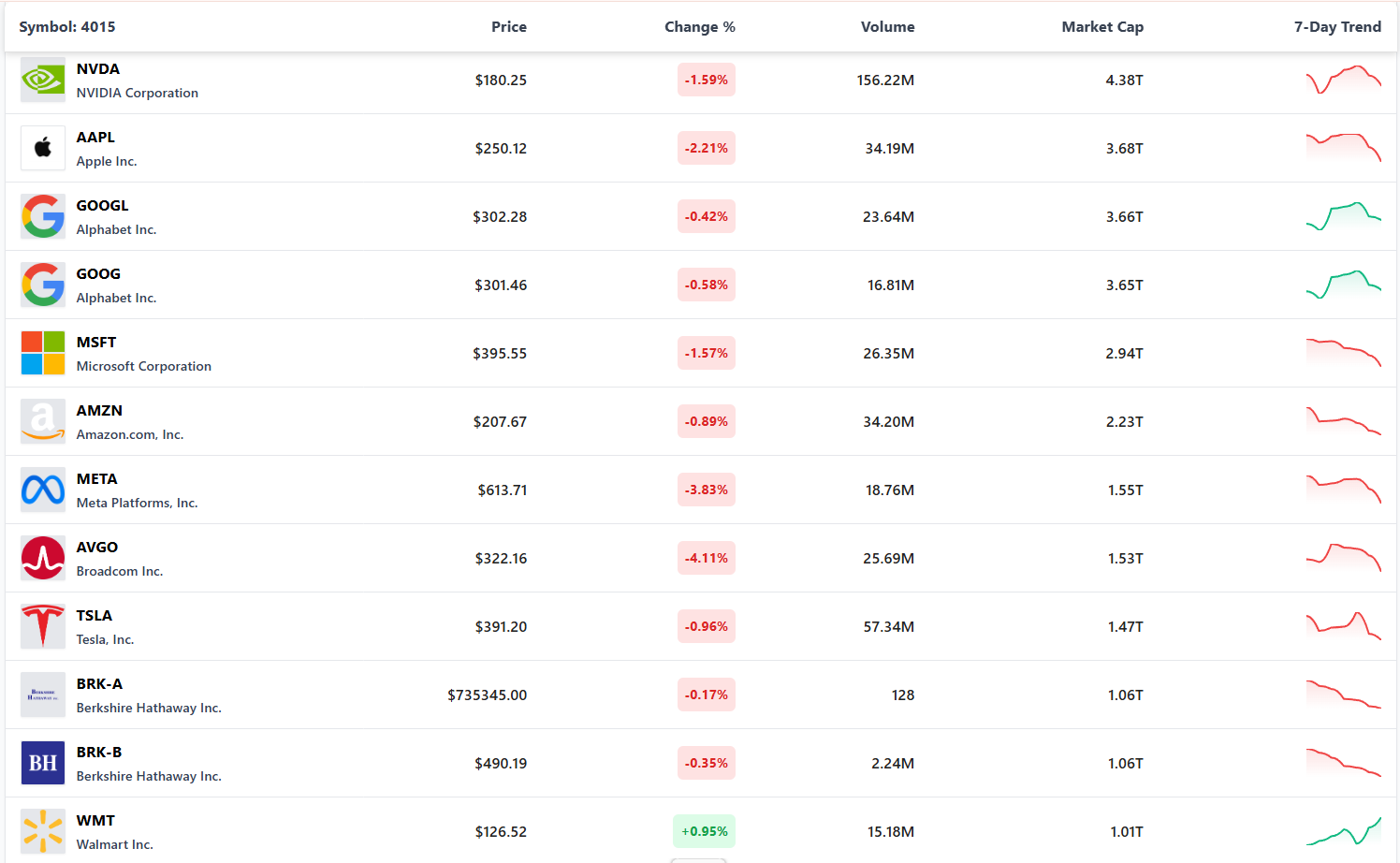
Tickerplace gives you the real-time data and analytical depth you need to track the Santos share price with confidence. From live price feeds and technical charts to fundamental metrics like P/E ratio, market capitalization, and dividend yield, the platform puts every data point in one place. Use the stock screener to filter ASX energy stocks by valuation, yield, or momentum criteria and identify where Santos stands relative to sector peers. For investors who want to sharpen their understanding of financial metrics before making buy or sell decisions, Tickerplace offers a research and analysis environment built specifically for active market participants.
FAQ
What is the current Santos share price?
The Santos share price is approximately $8.10 AUD, reflecting a 24% gain year-to-date and a 39% increase over the past 12 months as of mid-2026.
What affects the Santos share price most?
Global oil prices, production volumes, cash flow performance, and geopolitical events affecting energy supply are the primary drivers of Santos share price movement.
Is Santos a buy according to analysts?
11 of 14 analysts currently rate Santos shares as a buy or strong buy, with a consensus price target of $8.47 and upper-end forecasts reaching $10.17.
What is Santos’s Santos share price 52-week range?
The 52-week range for Santos shares is approximately $5.77 to $8.19 AUD, reflecting meaningful price volatility driven by oil market conditions and production updates.
What is Santos’s cash flow breakeven price?
Santos operates with a cash flow breakeven of approximately $45 to $50 per barrel of oil, which provides a significant buffer against downside energy price scenarios.